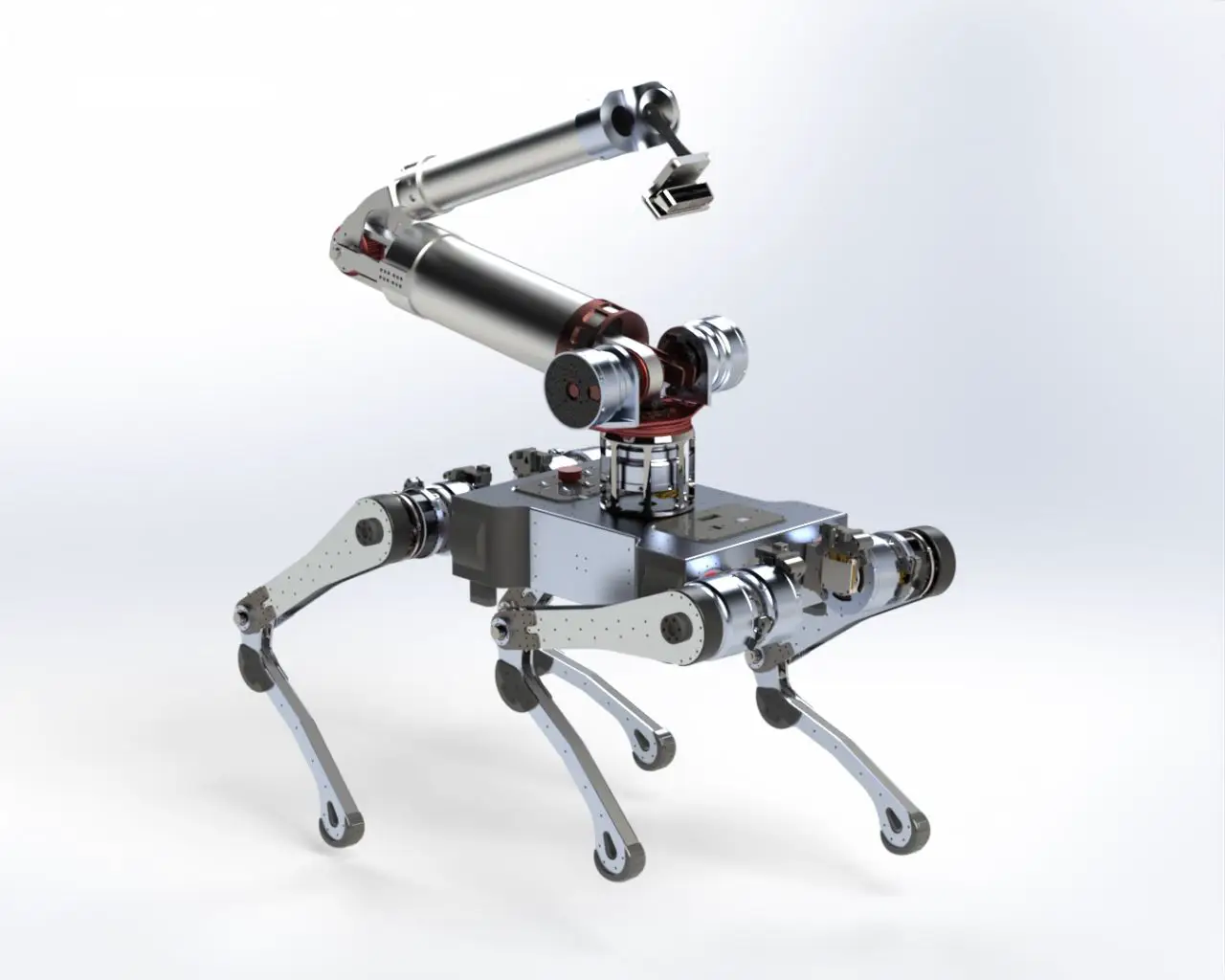
Designing Low-Cost Actuators for Embodied AI
A deep-dive into the tradeoffs between torque density, backdrivability, and cost when building general-purpose robot arms for data collection.
~8 min read
Creating robots that interact and adapt with humans — hardware designed for the field, not just the demo. Every system starts from first principles: custom actuators, grippers, and teleoperation rigs built for real environments. Every design decision is a step closer to robots that work anywhere, not just in the right conditions.


Founding engineer at KinesthetIQ, designing the actuators, grippers, and teleoperation hardware that make embodied AI physical. Every system starts from scratch — custom planetary gearboxes, low-cost BLDC actuators, bimanual control devices — because the edge cases that matter rarely fit off-the-shelf solutions.
That instinct to build from first principles was forged competing internationally with Mars Rover Manipal, then sharpened through research at IISc RBCCPS (legged robot manipulation) and Chirathe Robotics / ARTPARK (high-TRL quadrupeds). Rapid iteration, controlled failure, and a clear understanding of why something broke — that's the cycle.
The larger goal: hardware that trains the next generation of robots. Low-cost, standardised work cells that collect the demonstrations Large Behaviour Models need to generalise. General-purpose manipulation that feels inevitable — not because it's impressive, but because it's practical and deployable at scale.
Have a robotics project, research opportunity, or just want to connect? I'm always open to conversations about hardware and embodied AI.